


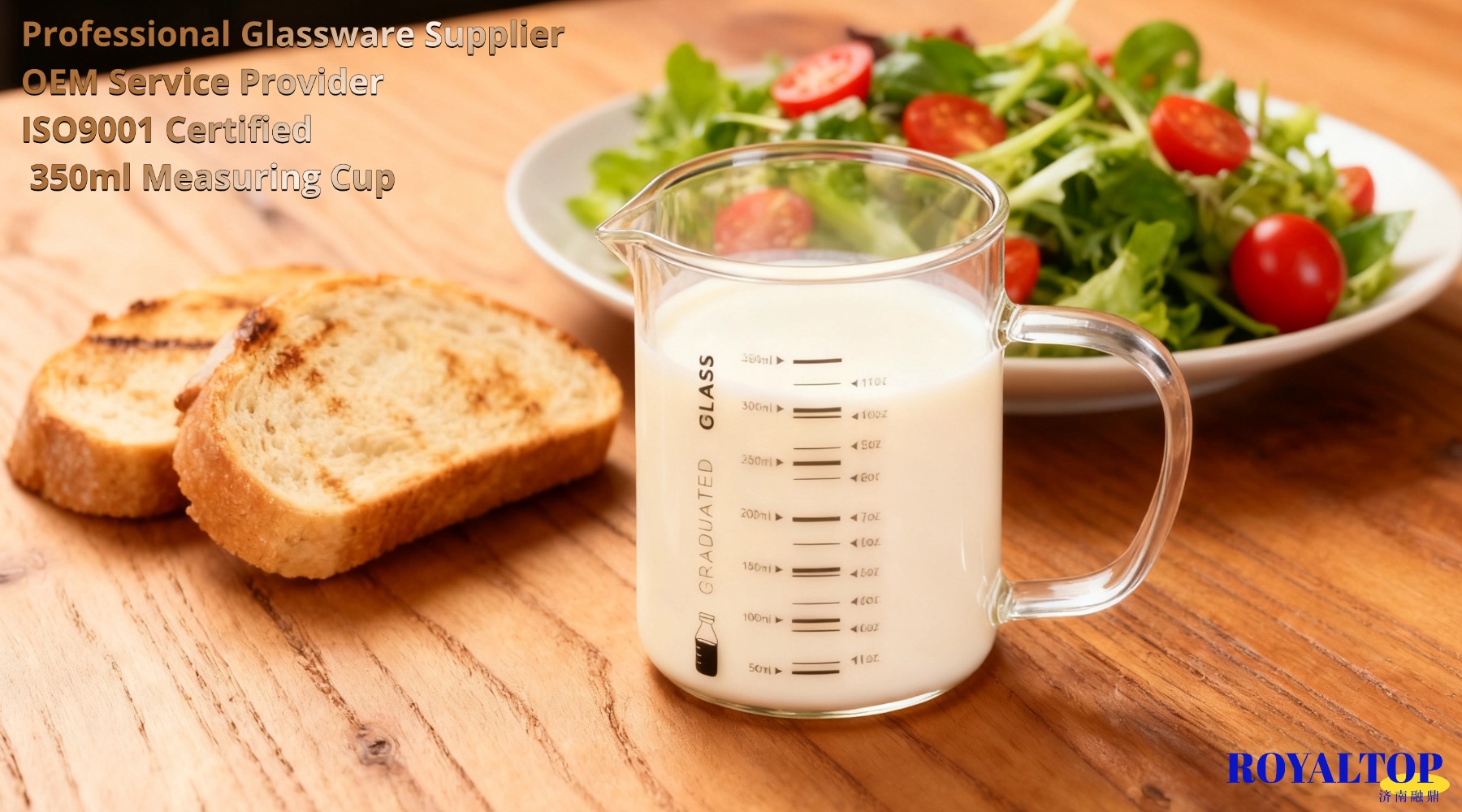
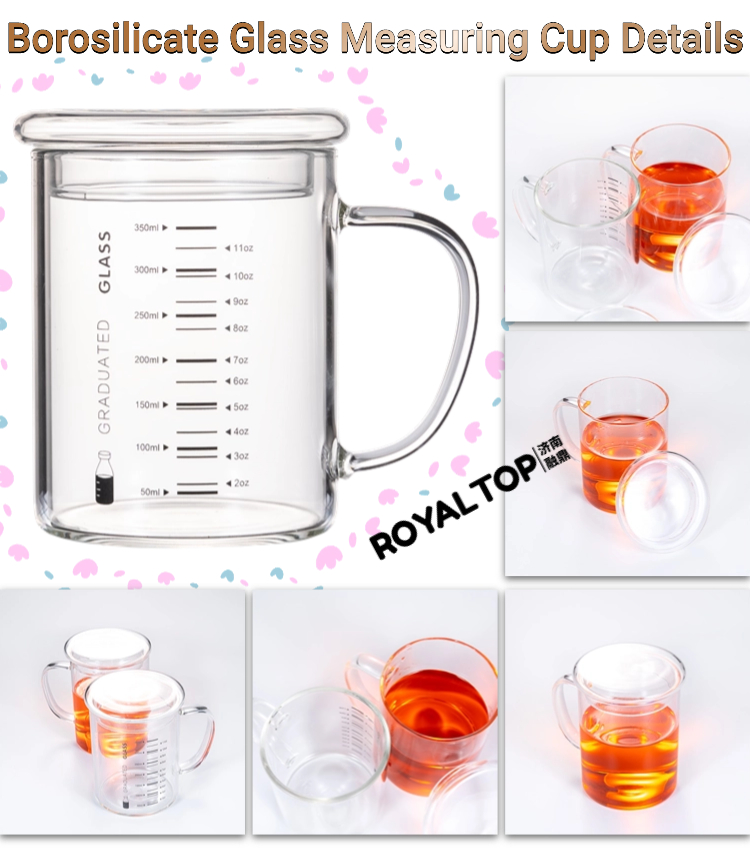
Clear Borosilicate Glass Measuring Cup with Lid a& Handle / Round and Square
Heat-Resistant Material: Crafted from premium thickened borosilicate glass, this food-grade measuring cup withstands high temperatures and prevents shattering. It boasts high strength and hardness, crystal-clear transparency, and is safe, non-toxic, and easy to clean. Eco-friendly and made from 100% recyclable material.
Clear Graduations: Marked with dual measurement units (mL and oz) for versatile use across different scenarios. Enables precise control of powder-to-liquid ratios and volumes with transparent visibility. Graduations, patterns, and logos can be customized via screen printing.
Heat-Resistant & Burn-Proof: Withstands instant temperature changes from -20°C to 150°C. Microwave-safe. Resists shattering when filling with hot water in winter. Multiple glass thicknesses available: economical 2mm, plus 2.5mm and 3.2mm options.
Comfortable Grip: Ergonomic thickened handle design. Compact straight-sided structure for easy storage.
Multi-functional: This heat-resistant measuring cup meets daily hot/cold beverage needs—perfect for crafting cocktails,
cappuccinos, fruit teas, coffee, oatmeal, iced drinks, and smoothies. It doubles as an everyday water cup.
Comprehensive OEM Services: We manage the entire process from raw materials to product delivery, ensuring quality and timely shipment. Common cup shapes include round, square, and ribbed designs. Customization options include capacity, packaging, logo, and spout specifications. We also provide product certification, video factory inspections, and third-party testing services.
Product Information
| Product Name: | Coffee & Milk Glass Mug |
| Manufacturer: | Royaltop |
| Model: | SP-19-2 |
| Material: | High Borosilicate Glass |
| Shape: | Round, Square, Ribbed |
| Capacity: | 350ml, 500ml, Customizable |
| Features: | Handle Included |
| Accessories: | Glass Lid |
| Packaging: | Carton Boxes, White Paper Boxes, Custom Color Paper Boxes |
| Logo: | Screen-printed |
| Suitable for: | Home, Kitchen, Hotel, Café |
| Suitable liquids: | Water, Coffee, Tea, Juice, Alcohol, Milk |
| Temperature range: | -20°C ~ 150°C |
| Suitable heating methods: | Freezing, Hot water, Induction cooker, Open flame |
| Samples: | Available |
| Delivery time: | 15~35 days |
| MOQ: | 5000 Pcs |
Usage Guidelines for Sodium-Calcium Glassware:
Sodium-calcium glassware (the most common type of everyday glassware, such as standard drinking glasses and tableware cups) requires temperature considerations based on material properties and usage scenarios. The key is to avoid breakage caused by “sudden temperature changes.” Specific temperature ranges and precautions are as follows:
I. Core Usage Temperature Range
1. Standard Usage Temperature: -20°C to 120°C
This is the safest temperature range for sodium-calcium glass, covering everyday scenarios:
- Low end: Can briefly hold chilled beverages (e.g., 4°C ice water, refrigerated milk) or be placed in the refrigerator (avoid direct contact with inner walls to prevent localized rapid cooling).
High-Temperature End: Can hold warm or hot water (e.g., 80°C to 100°C boiling water), but note the **“preheating”** requirement (see precautions below). Never pour scalding liquids directly into the glass.
2. Maximum Temperature Tolerance (Not for Long-Term Use): Sodium-calcium glass has a softening point of approximately 600°C to 700°C. However, this refers to industrial processing temperatures. In daily use, never expose it to high heat sources (e.g., open flames, microwaves, ovens). Uneven heating can cause rapid breakage and pose safety risks.
II. Critical Usage Restrictions: Avoid Thermal Shock
The primary weakness of sodium-calcium glass is its inferior thermal stability (compared to borosilicate glass). When temperature differences exceed 50°C to 80°C across different parts of the vessel, uneven thermal expansion and contraction can cause shattering. Strictly avoid the following actions:
❌ Pouring 100°C boiling water directly into a cold cup that recently held ice water (around 0°C);
❌ Immediately rinsing a hot cup (used for porridge/soup over 90°C) with cold water or placing it in the refrigerator;
❌ Placing a cold cup directly on a hot stove or radiator to warm it;
❌ Heating it in a microwave (unless explicitly labeled “microwave-safe” on the base; most standard sodium-calcium cups are not microwave-safe).
III. Safety Usage Recommendations
1. Preheat before hot water: When filling with boiling water, first pour a small amount of warm water and swirl the cup to evenly heat the walls (10–20 seconds). Gradually add hot water to significantly reduce breakage risk.
2. Identify “Special-Treatment Sodium-Calcium Glass Cups”: Some brands subject sodium-calcium glass to “physical strengthening” (e.g., rapid cooling treatment) to enhance thermal stability. Such cups may be labeled “Heat Shock Resistance ≥100°C,” allowing broader usage. Always follow product instructions (treat as standard sodium-calcium glass if unlabeled).
3. Avoid prolonged exposure to extreme temperatures: While briefly holding ice water or hot water is acceptable, prolonged storage (e.g., over 24 hours) is not recommended. This prevents microscopic cracks from forming due to sustained thermal stress (invisible to the naked eye but prone to breakage later).
IV. Comparison with Borosilicate Glass (For clearer selection)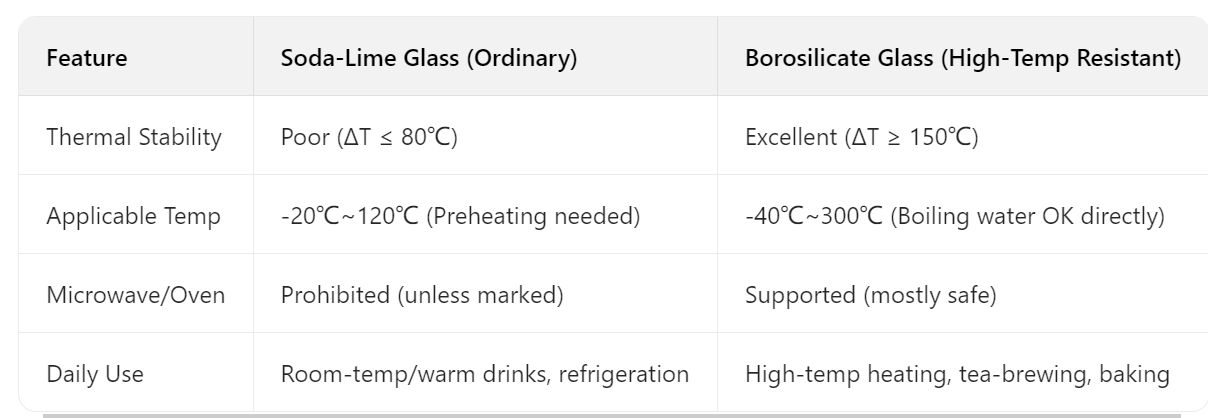
V. In summary, standard sodium-calcium glass cups are safe for daily use with “lukewarm water, hot water (requires preheating), and ice water.” The key is to avoid “sudden temperature changes” and “direct high-heat sources.” Proper usage according to the scenario will extend the product's lifespan.


