At the time, Italian espresso machines were large, complex and expensive, and were mainly used in cafés. Alfonso Biletti, while observing his wife doing the laundry, was inspired by the workings of an old washing machine and conceived of a similar mechanism for making coffee, and after many attempts he invented the moka pot.
What are some common moka coffee makers?
Here are the common types of moka pots available today:
By material
- Stainless steel moka pot: not easy to rust, easy to clean, can be applied to a variety of heating methods, including induction cooker, open flame and electric ceramic stove, durable and safe.
- Aluminium alloy moka pot: cheaper, lighter, high thermal conductivity, extraction speed, but easy to heat deformation and easy to be corroded, maintenance of moisture, suitable for occasional use or carry out.
- Copper moka pot: good insulation, long service life, not easy to damage, but the price is higher, suitable for the pursuit of high-quality coffee experience consumers.
According to the number of valves
- Single valve moka pot: simple structure, is the most classic and traditional moka pot, can reach 2-3bar pressure, low pressure, not easy to over-extraction, suitable for simple drink a milk coffee, play a milk froth, do a latte crowd.
- Double valve moka pot: there is a pressure valve, extraction pressure is greater, can reach 3-4bar or so, extraction rate is higher, out of the coffee liquid oil is richer.
- Three-valve moka pot: on the basis of the two-valve moka pot to the liquid outlet and then add a booster valve, so that the overall extraction pressure can reach about 4bar, so that the oil is more delicate and rich.
According to the structure process
- Traditional threaded moka pot: the upper and lower pots are connected by threads, such as the common Billetti classic octagonal shape moka pot.
- Sonic welding moka pot: using sonic welding technology, one-piece moulding, no need for threaded connections, better sealing, but also more solid.
- Tall moka pots: with longer taller legs, they can be insulated and remain stable, while increasing air flow between the bottom of the pot and the heating surface.
By function
- Ordinary manual moka pots: need to be manually operated, including water, powder, heating, extraction and other steps, such as the above types of materials and valve forms of manual moka pots.
- Electric moka pot: can automatically complete the steps of grinding coffee, adding water, heating and brewing, convenient and easy to use and have programmable functions, but the price is relatively high.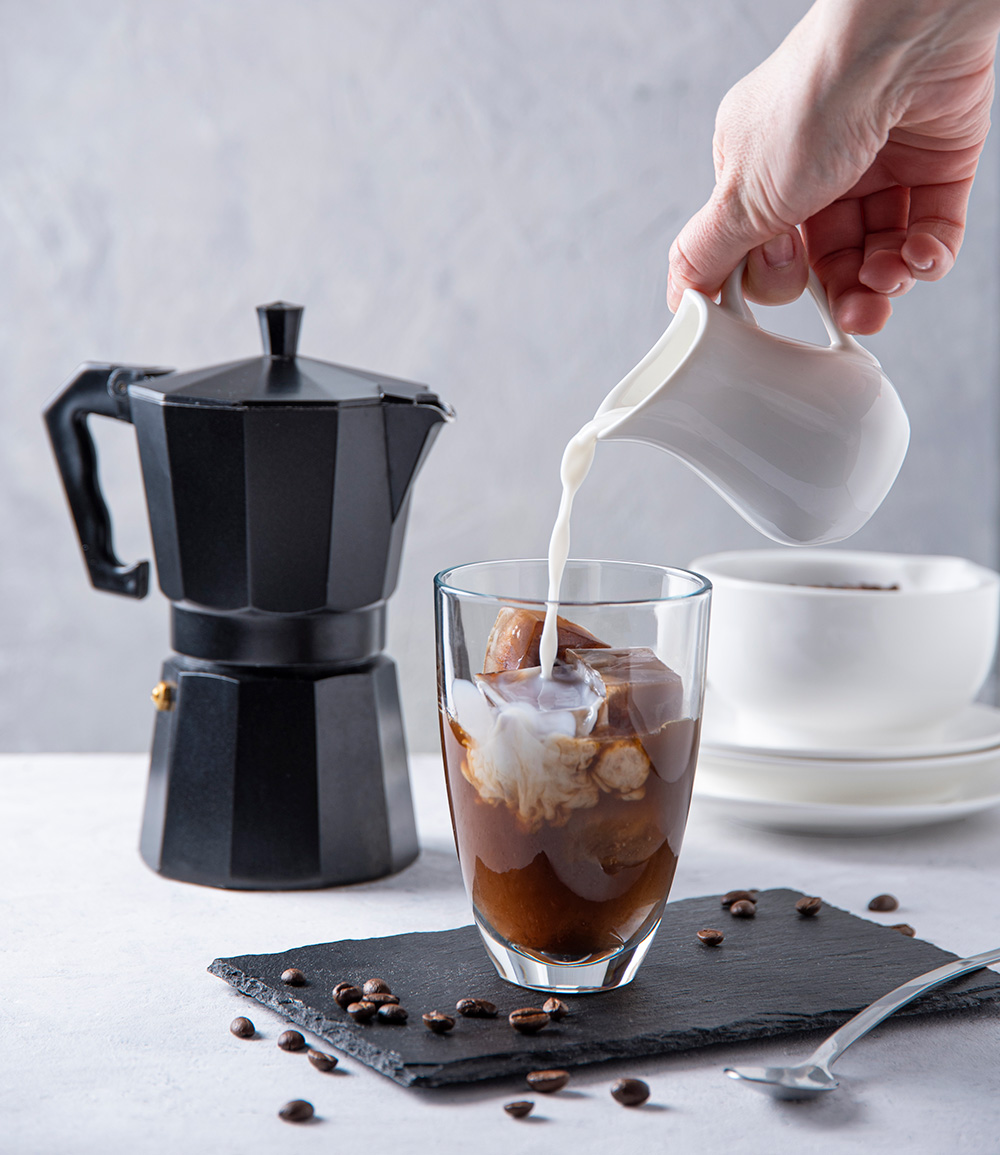
Why does a moka pot make great coffee? What are some of its features?
The advantages of moka pot include:
- Strong coffee taste: through high temperature and high pressure extraction, the oils and flavour substances of coffee beans can be fully extracted, and the coffee produced has a mellow taste and strong aroma, which is suitable for people who like strong coffee taste.
- Relatively easy to operate: simple structure, composed of the lower pot, the pot, the upper pot of three parts, when using just add the water into the lower pot, coffee powder into the pot, heating the lower pot so that the water produces steam pressure, pushing the hot water through the layer of coffee powder into the upper pot can be extracted from the coffee.
- Lower cost: Compared with professional espresso machines, moka pots are more affordable, and do not need to be equipped with expensive accessories such as bean grinders, using ordinary medium-fine ground coffee powder can be.
- Wide range of applications: compact size, easy to carry, suitable for use in the home, office, outdoor camping and other scenes.
Its disadvantages are mainly:
- Safety Risks: Most of them need to be heated by open flame or electric ceramic stove, if they are not used properly, such as unsupervised heating, poor control of the fire, etc., which may lead to spattering of the coffee liquid, or even lead to accidents such as fire or burns.
- Higher technical requirements: you need to master certain skills, such as the appropriate degree of ground coffee, the amount of powder, the amount of water control, as well as the grasp of the heating fire and time, otherwise it is easy to under-extraction, over-extraction, so that the taste of coffee is bitter or thin.
- Cleaning is more cumbersome: need to be cleaned in a timely manner after use, and can not be used in a dishwasher, the internal residual coffee grounds and grease if not cleaned up, it will affect the next time to use, but also may breed bacteria.
- Limited extraction pressure: the extraction pressure is generally 2-4 bar, much lower than the 9-12 bar of professional espresso machine, the richness and concentration of the coffee oil is not as good as espresso, and it is difficult to make rich flower effect.
- Limited material: common aluminium moka pots can not be heated by induction cooker, and aluminium is easy to rust, maintenance should pay attention to moisture, can not be soaked for a long time.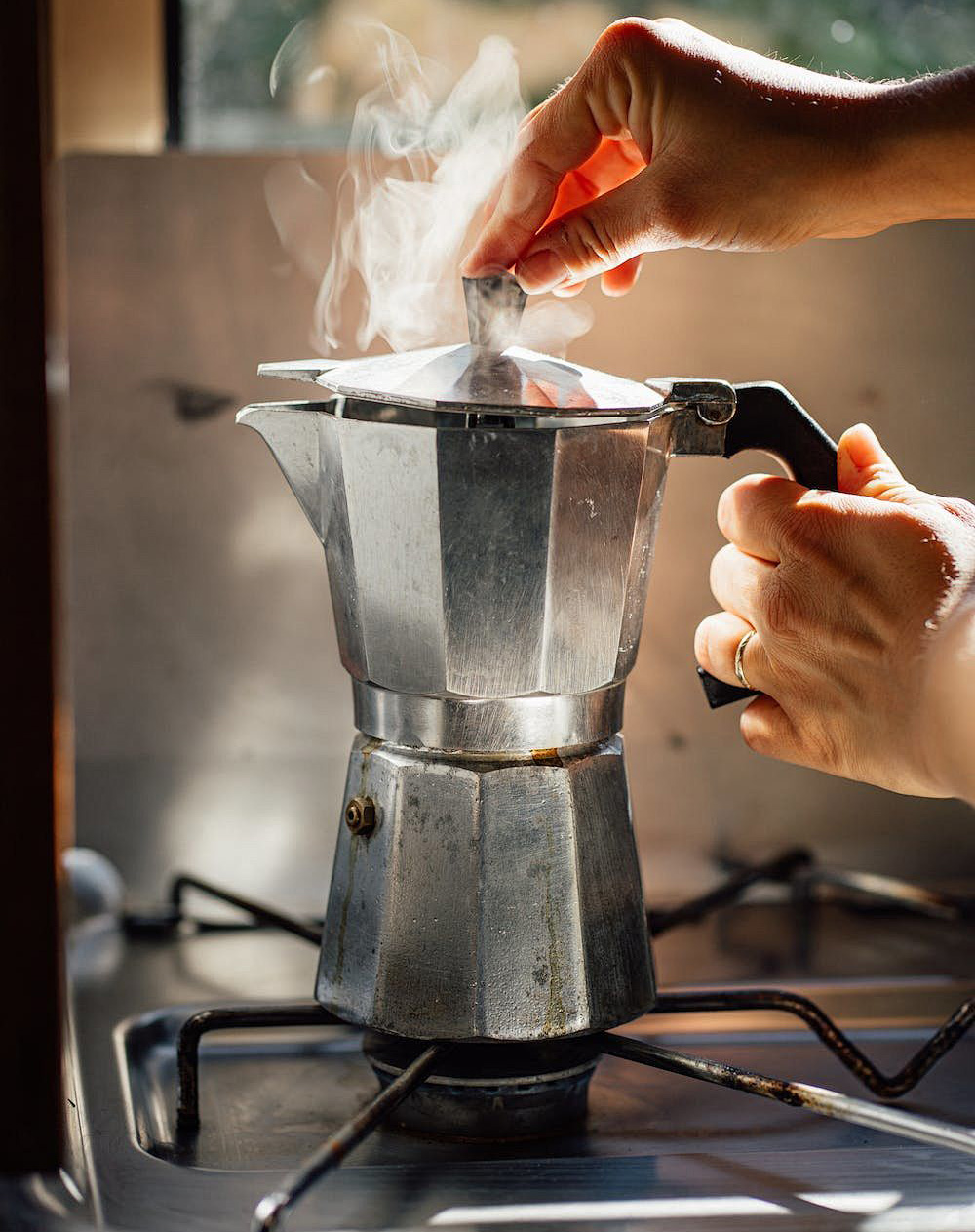
How to use an espresso mocha pot?
Here are the basic steps for using a mocha pot:
- Cleaning: the first time you use it, you should wash the mocha pot to remove any impurities that may be left in the pot. After that, simply rinse it before each use.
- Grind the coffee powder: Use a medium to fine grind; too coarse a grind will result in under-extraction and too fine a grind will result in over-extraction.
- Add water: Add an appropriate amount of cold or room temperature water to the lower pot of the moka pot, taking care not to exceed the safe water level, usually marked with a scale inside the pot.
- Assemble: Place the filter paper over the filter of the moka pot (if there is one) and fit the filter to the lower jug, making sure it fits snugly. Then pour the ground coffee into the filter and tighten the upper and lower pots.
- To heat: Place the moka pot on a heat source, such as a stovetop (or just turn it on if it's an electric moka pot). Heat over medium-low heat and see the water in the lower pot begin to boil, the resulting steam will press the hot water through the layers of ground coffee into the upper pot to extract the coffee. When you hear a ‘gurgling’ sound from the pot and a steady flow of coffee liquid into the upper pot, extraction is almost complete.
- Pouring the coffee: Remove the moka pot from the heat source, wait a few moments for the liquid to stabilise, then carefully pour the coffee into a cup and enjoy.
It is important to note that the heating process should be closely observed to avoid spillage of the coffee liquid, and different moka pots may have some differences in details, so refer to the product manual when using.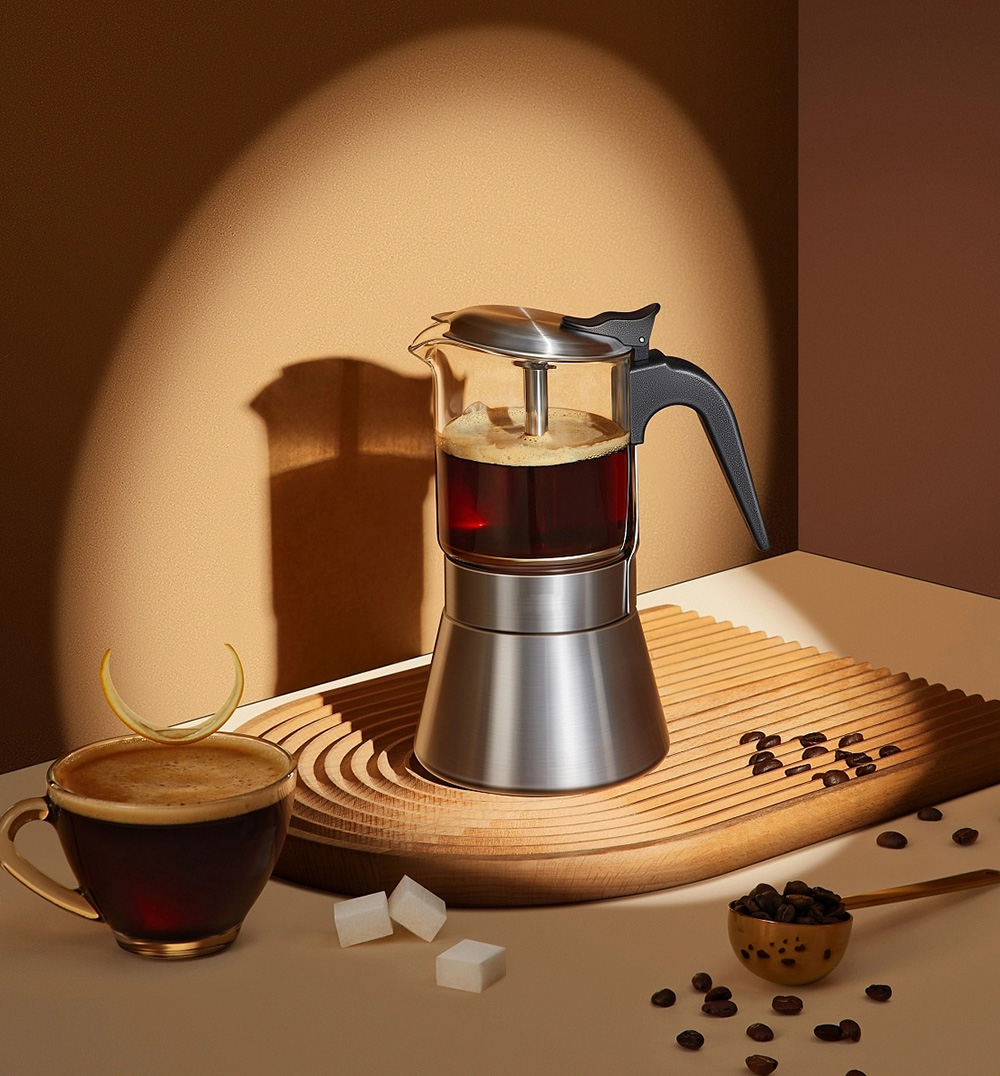
What are the precautions for using a stove-top coffee moka pot?
There are the following considerations for using a mocha pot:
Heating
- Control the heat: If you are heating with an open flame, use medium-low heat. Too much fire may make the pressure of the lower pot too high, resulting in spattering of coffee liquid, and may also damage the moka pot.
- Heating source selection: stainless steel moka pots can be used with induction cooker, electric ceramic stove and open flame; aluminium alloy and copper moka pots are best used with electric ceramic stove or open flame, avoiding induction cooker (because aluminium alloy and copper can not be directly heated by induction cooker).
Assembly
- Check the parts: Before each use, check whether the kettle body, strainer, valve and other parts are intact and undamaged, and make sure the seal is good. If the parts are damaged, it may affect the extraction effect or lead to safety problems.
- Proper Installation: When installing the strainer and upper jug, make sure they are in place and tightened. For example, a moka pot with a traditional threaded connection that is not tightened may leak during the heating process.
Ingredients
- Coffee powder selection: Use coffee powder with medium to fine grind, too coarse coffee powder will make the extraction insufficient and the coffee flavour thin; too fine coffee powder will easily cause clogging and over-extraction, making the coffee bitter.
- Water control: strictly follow the water level scale of the pot to add water, too much water may overflow when heating, too little water may not be able to extract coffee properly.
Safety and Maintenance
- Anti-scald: The heated moka pot is hot, including the body, spout and handle parts. Use insulated gloves or a towel to hold it to prevent burns.
- Cleaning and Maintenance: Wash it promptly after use to prevent coffee residue from affecting the next use. If the moka pot is made of aluminium alloy, dry it after cleaning to avoid rusting.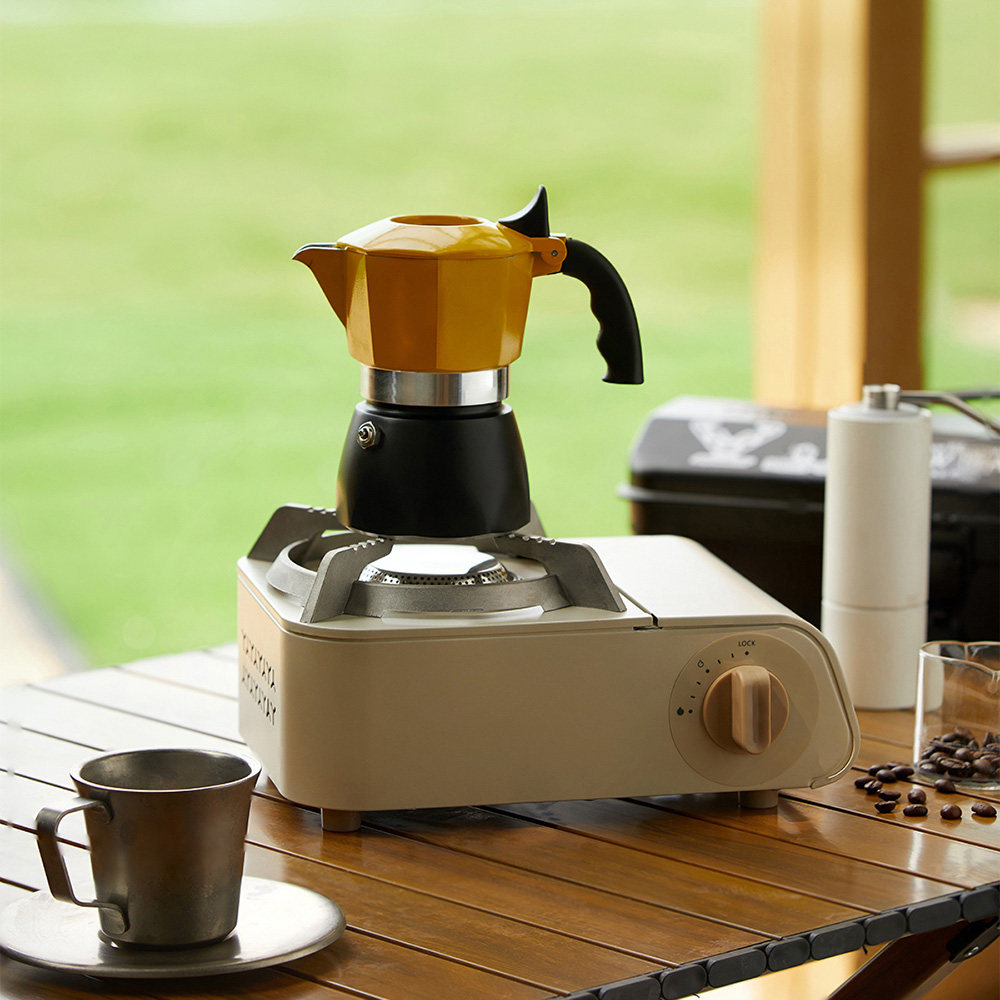
How to clean a moka pot?
There are the following main steps to cleaning a moka pot:
First, after using the moka pot, pour out the remaining coffee grounds and coffee liquid inside the pot while it is still warm.
Next, take apart the various parts of the moka pot (including the body, filter, etc.). You can rinse these parts with water to wash off any coffee residue from the surface.
For coffee grounds on the filter, you can gently brush them off with a soft-bristled brush. If there are stubborn coffee stains, soak the filter in warm water with the right amount of detergent for a while and then rinse it off.
If there are coffee stains on the inside of the pot, you can also use a sponge or soft cloth dipped in a detergent solution to wipe them away, and then rinse thoroughly with water to make sure there is no detergent residue.
Finally, place the cleaned parts in a ventilated area to dry and you're done.

 100ml Custom Glass Oil Sprayer – Ultimate OEM Cooking Oil Dispenser for Wholesale Brands
 20+ Years Spice Grinder Factory | Urgent Order Shipped Ahead Schedule for European Partner
 Leading Spice Packaging Manufacturer Royaltop Successfully Ships Premium Containers to World-Class American Spice Brand Supplying Walmart
 Royaltop's Perfect Spice Packaging Solutions


