Can I use the same grinder to grind salt and pepper? Why does my grinder work well for making pepper powder but falls apart when grinding Himalayan salt? Why did my pepper grinder break while grinding herbs?
Royaltop, as a supplier of salt and pepper mills for more than a decade, has developed hundreds of manual and electric grinders and even more tens of millions of pepper grinders. So we have enough experience to answer these questions.
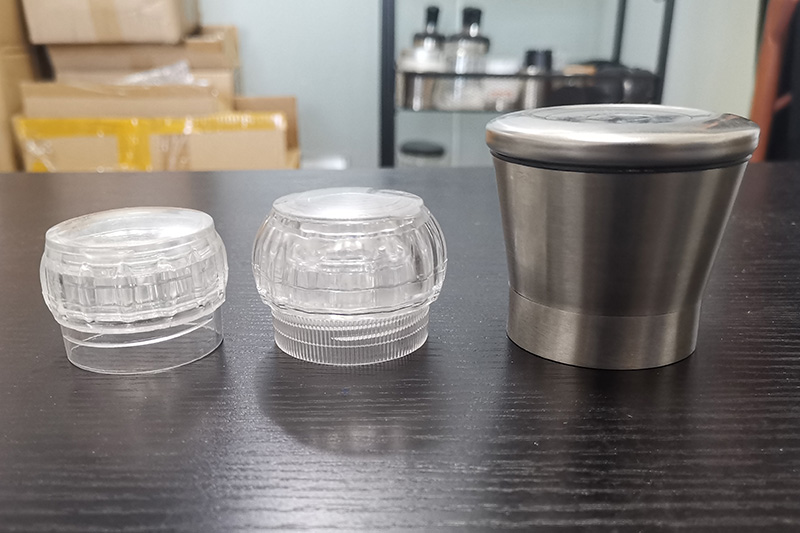 First, to answer the last question, neither manual pepper mills nor electric pepper mills are good for grinding herbs and spices that have coarse fibers. Cinnamon or cloves, for example, are too big and hard to be ground in a pepper mill at all! Then there are cumin particles, which are equally poorly ground when using certain pepper grinders, such as those with plastic grinding rotors. So, when you want to grind other spices with a pepper mill, be sure to test a sample for yourself to see how it works! Contact Royaltop and we'll not only help you choose the right grinder, but you'll also have the chance to get a free sample.
Then, let's answer the first question. Yes, the name of this product is Salt and Pepper Mill, and pepper mills with universal ceramic grinding rotors work perfectly well for grinding salt and pepper. However, grinders made with plastic rotors are not necessarily suitable for all salt particles!
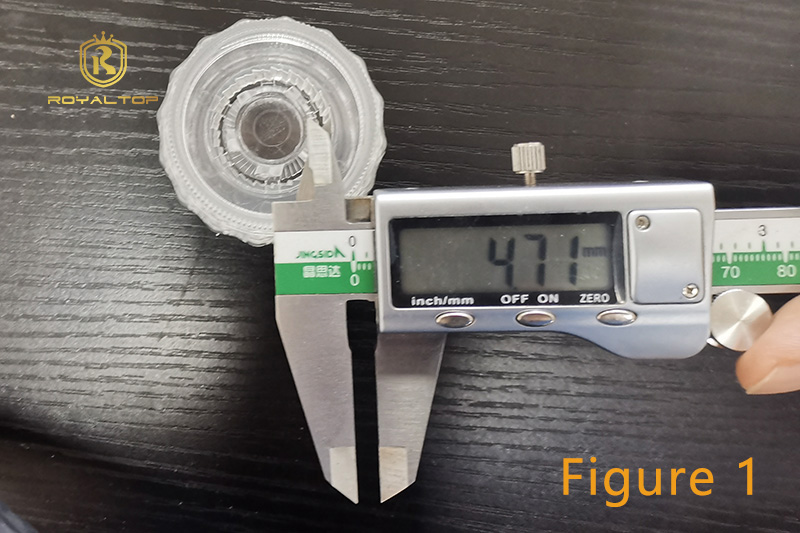
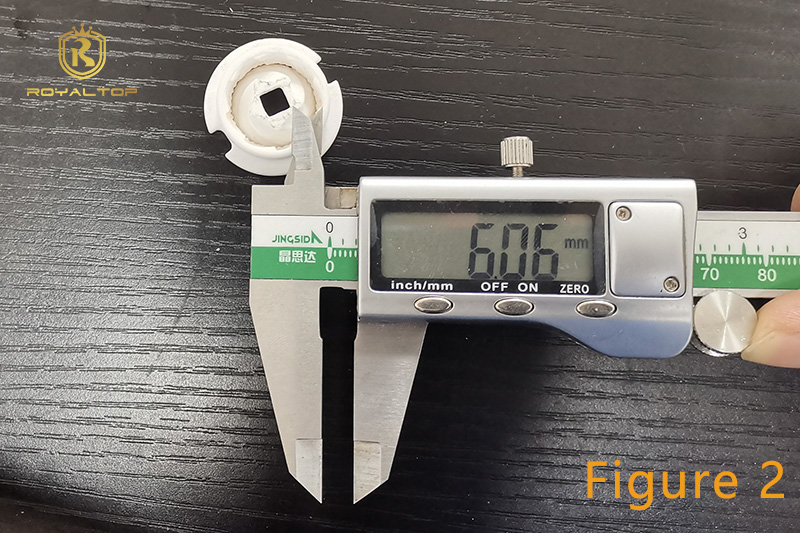
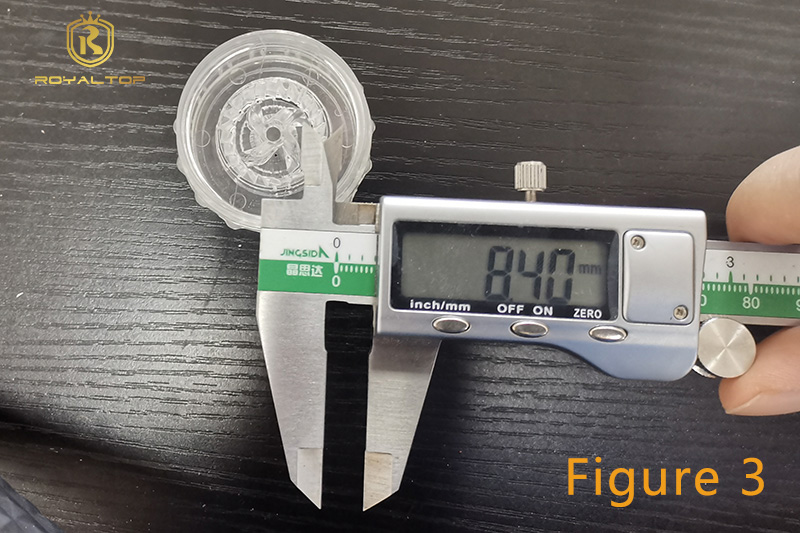
The grinding core is the most important component, which is usually made of ceramic or plastic and is divided into two layers, inner and outer. When you remove the cap, you'll see a circular crack between the two layers, through which the spice particles enter the cap and are eventually ground into a powder. However, salt and pepper particles do come in different sizes. We first measured the width of the slits in the ceramic rotors of common pepper mills, which are 4.7mm, 5.9mm, and 8.4mm respectively, and the results of the measurements can be seen in Fig. 1, Fig. 2, and Fig. 3.
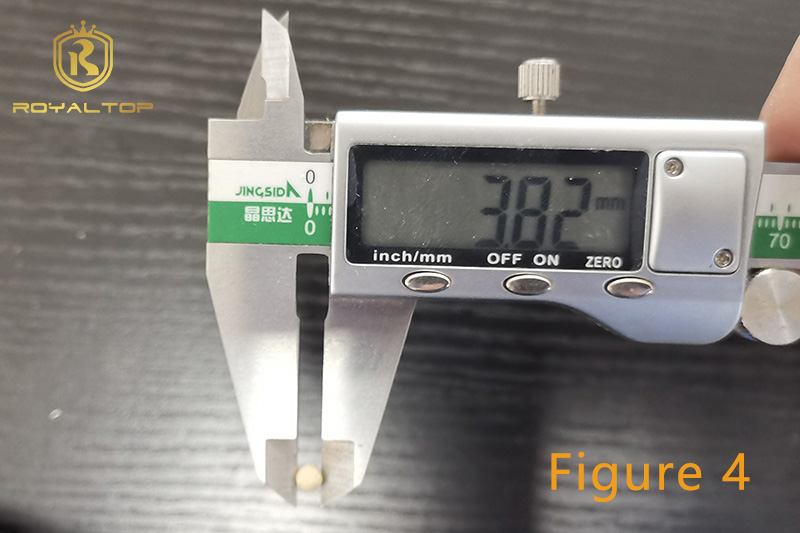
Then we measured the diameter of the pink salt and pepper. The diameter of the pepper particles is about 3.5mm~4.5mm, Figure 4.It is obvious that all of our pepper particles can enter the grinding rotor smoothly, so all three mills can grind pepper well.
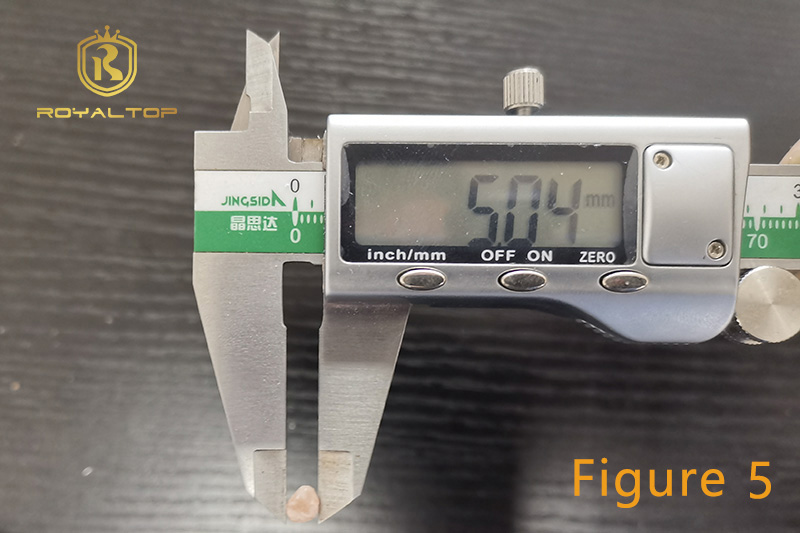
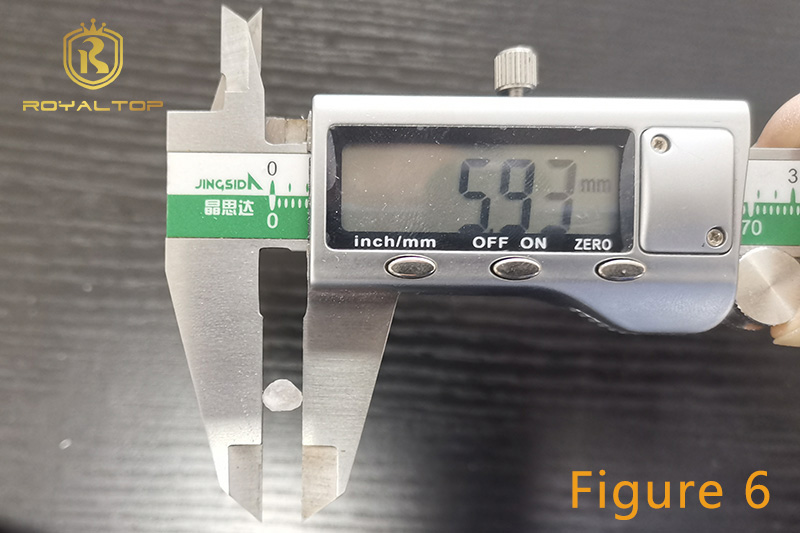
Then the diameter of Himalayan salt was measured to be 5mm~6mm, Fig.5 and Fig.6. The first grinding cap may not be suitable for grinding Himalayan salt. Because salt particles are usually broken from large pieces into small particles, they are not uniform in particle size. Through the grinding test, some large particles of salt remained in the spice bottle at the end never able to enter the grinding chamber.
According to our previous tests and R&D experience, when the diameter of the salt particles is not larger than 10% of the width of the rotor slit, the salt mill works well through gravity and the constant squeezing of the particles inside the spice shaker. When the diameter of the salt particles is greater than 25% of the width of the grinding rotor gap, there will be residual salt particles inside the spice shaker that cannot be ground. When the diameter of the particles is more than 40% of the width of the rotor slit, you can hardly use this grinder, especially with certain hard mineral salts, such as pink salt, which may damage the plastic grinding core.

 100ml Custom Glass Oil Sprayer – Ultimate OEM Cooking Oil Dispenser for Wholesale Brands
 20+ Years Spice Grinder Factory | Urgent Order Shipped Ahead Schedule for European Partner
 Leading Spice Packaging Manufacturer Royaltop Successfully Ships Premium Containers to World-Class American Spice Brand Supplying Walmart
 Royaltop's Perfect Spice Packaging Solutions


