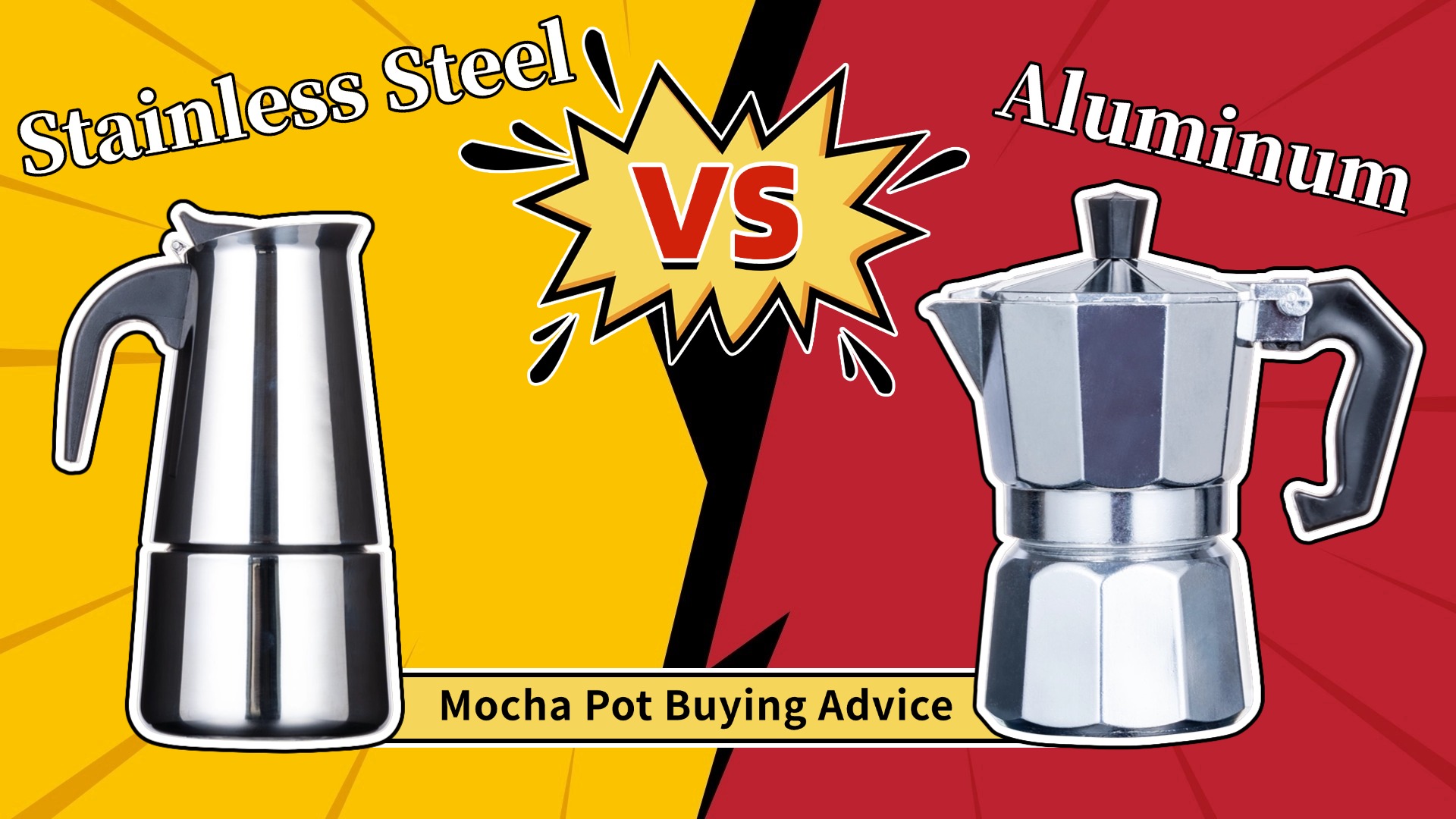
Choosing between a stainless steel or aluminum
moka pot is indeed a question to ponder, with each having its own characteristics. As a coffee lover, I understand the tussle - it's like choosing between an old classic and a modern golden oldie. Let's dive into their pros and cons and help you find the best one for your kitchen:
✅ Pros.
1. **Excellent thermal conductivity:** Aluminum is a good conductor of heat and heats up quickly, reaching the pressure and temperature needed to extract the coffee more quickly, and the whole brewing process is usually a little faster.
2. **Classic flavor (insisted by some users):** Many
moka pot enthusiasts believe that aluminum pots produce coffee with a more “traditional” or “classic” flavor. This may have to do with the thermal conductivity of aluminum and the formation of an oxide layer inside the pot (although this is scientifically debatable).
3. **Lightweight:**
Aluminum pots are much lighter than stainless steel pots, making them easier to pick up, handle, and clean.
4. **Lower cost:** Usually aluminum moka pots are cheaper than stainless steel pots of the same size.
5. **Classic look:** With classic designs such as the iconic octagonal shape, it is a vintage decorative piece in the kitchen.
❌ Cons
1. **Prone to corrosion and oxidation:**
** Aluminum reacts with water, acids in coffee, and cleaning agents (especially alkaline or chlorinated ones) and a protective layer of aluminum oxide forms on the surface. Although this oxidized layer prevents further corrosion, the appearance will darken, lose its luster, and even become spotted.
* It should not be cleaned in a dishwasher, as dishwasher detergents are usually highly alkaline and will corrode the aluminum and damage the oxide layer.
* It must be thoroughly dried after cleaning, otherwise it is easy to leave water stains or even accelerate corrosion.
2. **Relatively less durable: **
* Aluminum is soft and easily dented or deformed when bumped, especially at the threaded interface and the thinner part of the pot body.
* * Long-term use and repeated heating and cooling, coupled with possible corrosion, the lifespan is usually not as long as stainless steel jugs (although they can last for many years with proper care).
3. **High Maintenance Requirements:** Requires more careful care:
* Hand wash only, using a neutral, mild detergent.
* Avoid soaking.
* Wash and dry thoroughly immediately after use.
* Periodically air dry for storage (do not seal in a humid environment for a long period of time).
4. **Possible metallic taste (new pots or improperly maintained):** New aluminum pots or improperly cleaned and maintained aluminum pots may sometimes produce coffee with a metallic taste (commonly known as “aluminum taste”). This can usually be eliminated by “opening” the pot a few times (making a few pots of coffee and pouring it off). Ensuring a stable oxide layer is the key.
5. **Not suitable for induction cooktops (the vast majority):** Pure aluminum cannot be heated by electromagnetic induction. Unless a magnetically conductive stainless steel layer is specifically added to the bottom of the pot (some new models have it), it cannot be used on an induction stove.
✅ Advantages
1. **Extremely Durable:** Stainless steel is hard and very resistant to knocks, scratches and deformation. Solidly constructed, it usually lasts far longer than aluminum pots.
2. **Highly Corrosion Resistant:**
Stainless steel (especially food grade 304 stainless steel) is extremely resistant to water, coffee acids, and cleaning agents. It will not rust and is not easy to produce oxidized spots.
* Dishwasher safe (but it is still recommended to check specific product instructions), saving time and labor.
* Can be used with a variety of mild detergents.
* Does not easily retain flavors or colors.
* Less likely to leave unsightly water spots or corrosion even if not completely dried after cleaning.
4. **Hygienic:** Inert material that does not react with coffee, does not precipitate metallic flavors, and ensures the pure taste of coffee (theoretically).
5. **Modern appearance, long-lasting: ** Usually has a modern and minimalist design, and can maintain the silver luster for a long time (although there may be minor scratches or heating discoloration after use for a long time).
6. **Compatible with Induction (the vast majority):** Stainless steel itself can be heated by electromagnetic induction, so the vast majority of stainless steel moka pots can be used directly on an induction cooktop for wider applicability.
7. **More environmentally friendly? :** Theoretically, it lasts longer and reduces the frequency of replacement.
❌ Disadvantages
1. **Poor thermal conductivity:** Stainless steel conducts heat much slower than aluminum. This means:
* Longer preheating time.
* Takes longer to reach extraction temperature and the entire cooking process may be slightly slower than with aluminum pots.
* May result in less even heat distribution than aluminum kettles (but a good design will improve this by, for example, thickening the bottom of the kettle).
2. **Heavier weight:** Stainless steel is denser, the kettle will be much heavier than the same size aluminum kettle, and feel heavier in your hand.
3. **Higher cost:** Usually the price is higher than the same size aluminum pot.
4. **Flavor differences (some users feel):** Some long-term use of aluminum pots users believe that the stainless steel pot brewed coffee flavor is slightly different, may feel “cleaner” but may also be “slightly light” or “lack of a little mellow”. It may feel “cleaner” but may also be “a little lighter” or “a little less full-bodied”. This is mainly due to the difference in heat conductivity and the fact that there is no oxide layer involved with aluminum pots. However, flavor perception is very subjective.
5. **The pot is hotter when heated:** Stainless steel retains heat better than aluminum, which means that the pot stays hotter for longer after boiling, and needs to be handled with more care, preferably with insulated gloves .
Summary Comparison Table
| Features |
Aluminum Moka Pot |
Stainless Steel Moka Pot |
| Thermal Conductivity |
Very fast (heats up fast, cooks fast) |
Slower (slow to preheat, slightly slower to cook) |
| Weight |
Lightweight and portable |
Heavier |
| Durability |
General (afraid of bumping, easy to oxidize) |
Excellent (very resistant to knocks and corrosion) |
| Corrosion Resistance |
Poor (need to prevent oxidation, avoid alkali and chlorine) |
Excellent (no fear of water, acid, detergent) |
| Cleaning and Maintenance |
Trouble (hand wash only, neutral agent, must be dried) |
Simple (dishwasher safe, easy to clean, less likely to leave stains) |
| Applicable Stoves |
Open fire/electric stove (mostly not for induction) |
Open fire/electric stove/induction cooktop (Mostly applicable) |
| Coffee Flavor |
Traditional/Classic (some user preferences) |
Pure/clean |
| Metallic Flavor Risk |
New pots or improperly maintained pots may have |
Few |
| Appearance Maintenance |
Easy to oxidize and darken/spot |
Long-lasting shine (may show signs of use) |
Prices
|
Usually lower
|
Usually higher
|
Key Benefits
|
Fast heat conduction, light, classic flavor, cheap
|
Durable, corrosion resistant, easy to clean, induction compatible
|
Main drawbacks
|
Easy to oxidize, troublesome to maintain, not resistant to bumping
|
Slow thermal conductivity, heavier, more expensive
|
Suggestions for selection
* ** Looking for classic flavors, quick heating, lightweight, on a budget, and don't mind taking the time to maintain it meticulously? The ** → **Aluminum Moka Kettle** is the sentimental choice. Especially good for gas stove users who enjoy traditional rituals.
* ** Value durability, easy to clean (think dishwasher), hassle-free maintenance, compatible with induction cooktops, modern look, and long-term use? The ** → **Stainless Steel Moka Kettle** is a more practical and hassle-free choice. Especially suitable for modern kitchens, frequent users, or those who are too lazy to bother with maintenance.
Personal recommendation
** If your home is primarily induction, **stainless steel is almost the only choice**.
* If you are a coffee traditionalist, enjoy the vintage rituals of a mocha pot, and mainly use an open flame or an electric stove, **aluminum pots are better to satisfy the sentiment**.
* If you're looking for extreme frugality, ruggedness, and one-and-done durability, **stainless steel has significant maintenance advantages**.
* The difference in coffee flavor between the two is subtle and subjective and should not be the primary determining factor. Good coffee grounds, grind, water-to-powder ratio and handling practices have a much greater impact.
No matter which material you choose, remember to wash and dry it promptly after each use, and regularly check the condition of the seal and filter, so that you can keep your beloved moka pot with you longer and make better coffee. ☕ I hope this comparison will help you make the most suitable choice!
 100ml Custom Glass Oil Sprayer – Ultimate OEM Cooking Oil Dispenser for Wholesale Brands
 20+ Years Spice Grinder Factory | Urgent Order Shipped Ahead Schedule for European Partner
 Leading Spice Packaging Manufacturer Royaltop Successfully Ships Premium Containers to World-Class American Spice Brand Supplying Walmart
 Royaltop's Perfect Spice Packaging Solutions


